Why Air–Liquid Interface exposure is a game-changer for inhalation research

In traditional submerged cell culture, airway cells are covered by liquid – a condition that does not reflect how humans actually breathe. At the Air–Liquid Interface (ALI), mammalian cells and tissues are exposed directly to airborne substances, replicating human respiratory Mehr
When advanced exposure technology is used for environmental research

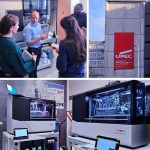
Following successful factory acceptance testing at Vitrocell in Waldkirch, we recently completed the final user training for the AirTox Monitor systems at LISA – Laboratoire Interuniversitaire des Systèmes Atmosphériques, (Université Paris Cité/Université Paris-Est Créteil (UPEC)/CNRS, France). What often matters most Mehr

New study by French Armed Forces research team: Pollutant mixtures trigger early lung effects long before acute toxicity appear

In a recently published study, researchers from the Institut de Recherche Biomédical des Armées (IRBA) and INERIS carried out repeated, sub-lethal co-exposures to aluminum oxide nanoparticles (Al₂O₃ NPs) and hydrogen chloride (HCl). A human air–liquid interface co-culture model of alveolar Mehr

Why nebulizer output rates matter in the VITROCELL Cloud System

Only when output rates are well controlled can we ensure that the same amount of aerosol reaches all positions in the system, enabling homogeneous deposition and robust, reproducible exposure conditions. To support this, our systems are equipped with an internal logger Mehr

What if your test substance is rare and you have only microliters to work with?

Single Droplet Sedimentation Systems are designed for dose-controlled, spatially uniform deposition of liquid aerosols at the Air–Liquid Interface. This exposure principle is ideal when: you work with liquid samples or suspensions materials are scarce or highly valuable precise dose control Mehr

Again Breaking News from NIH for biomedical research

The U.S. The National Institutes of Health (NIH) has announced an investment of more than $150 million to advance human‑based research methods and reduce reliance on animal models. This funding represents the first awards under the Complement Animal Research in Experimentation (Complement‑ARIE) program, Mehr

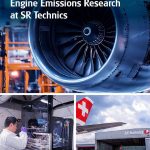
New Video: Advancing Engine Emissions Research at SR Technicss

Following the successful installation of the VITROCELL AirTox Monitor at the SR Technics Group test facilities, we’re excited to see it already fully integrated into ongoing emissions research. Watch the video: https://lnkd.in/de49AXcG  In collaboration with the Adolphe Merkle Institute and Mehr

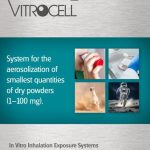
Why suspend a powder if you don’t have to?

Dry Powder Exposure Systems enable the direct aerosolization of dry powders — without first transferring them into suspension. This exposure principle is especially valuable when:  only very small quantities of material are available test substances should be evaluated in their Mehr